Fortnite Ranked Reload, How a Zero-to-Unreal Speedrun Works on Day 1
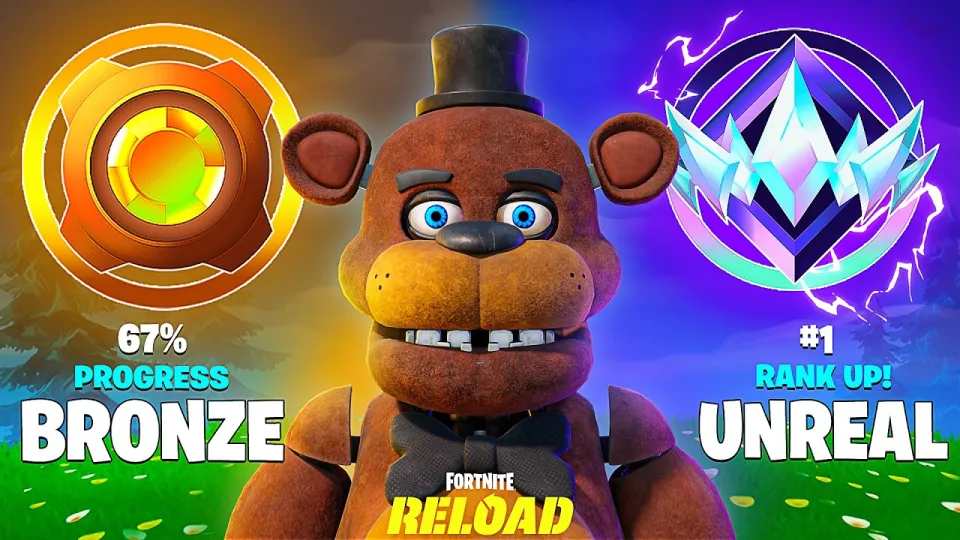
Video: I Played 24 HOURS for UNREAL! (Reload Speedrun on Day 1)
Want articles like this for your own video to promote it on YouTube and Google? Order them through the Telegram bot @sat_sit_bot. It writes articles around your video, embeds the video and publishes them on popular niche websites (no ads). Try it free: 50 articles on us.
· based on the channel TG Plays
Fortnite Ranked Reload resets every player back to zero at the start of a season, and climbing from the bottom tier to Unreal in one sitting is the mode's hardest challenge. In the video I Played 24 HOURS for UNREAL! (Reload Speedrun on Day 1), TG Plays attempts exactly that: a full zero-to-Unreal grind on reset day, before the ladder settles. Anyone who wants to follow the same route can start by checking the creator's map hub at the TypicalGamer Fortnite page, where the studio's custom maps and updates are published.
The run matters because reset day is the only window when the ladder is genuinely open. Within hours, the players who grinded early lock in their ranks and the lobbies harden.
What the Fortnite Ranked Reload ladder looks like from zero
Ranked Reload uses the same tier structure as the main ranked playlist, and every tier sits above the last: Bronze, Silver, Gold, Platinum, Diamond, Elite, Champion and Unreal. Each tier below Elite is split into three sub-divisions, so a player has to clear roughly twenty checkpoints before Unreal becomes visible on the progress bar.
Progress is driven by two things: where you finish and how many eliminations you collect along the way. Placement alone is not enough in the upper half of the ladder — a quiet top-five finish in Diamond moves the bar far less than a win with a handful of kills. Conversely, an early elimination with zero damage costs points, which is why reset-day runs punish reckless hot drops.
The percentage readout at the top of each tier is the detail viewers fixate on, and for good reason: the bar can stall in the high nineties before the final jump into the next tier. That is the moment a 24-hour run is decided.
Why Reload is faster to grind than standard Battle Royale ranked
Reload compresses the ranked loop. Matches are shorter, respawns keep players in the fight, and the circle closes aggressively, so a full game takes a fraction of the time a standard Battle Royale match demands. More matches per hour means more rank points per hour, which is what makes a one-day Unreal push theoretically possible.
The trade-off is volatility. Because fights restart constantly, a single bad rotation can hand back points earned over several matches. Speedrunners compensate by playing for consistency rather than highlight plays: land in a contested but manageable spot, secure early eliminations, then hold a strong position instead of chasing every fight.
The 24-hour format: pacing, fatigue and the reset-day window
A zero-to-Unreal session is as much an endurance test as a skill test. The realistic structure of such a run looks like this:
- Open with placement matches to establish a baseline rank and avoid wasting points on unfamiliar lobbies.
- Grind the low tiers in long uninterrupted blocks while lobbies are still mixed and forgiving.
- Take short, scheduled breaks before Diamond, because decision-making degrades long before aim does.
- Push the final tiers in the last hours, when the bar is closest to completion and every placement matters.
- Stop chasing losses — a tilted session at 3 a.m. can erase an entire tier.
Reset day adds a second clock. The longer the run goes, the more the surviving player pool consists of other grinders, so the average lobby difficulty rises hour by hour. That is why the first several hours are the most efficient ones, and why many attempts fail not at the bottom of the ladder but in the final stretch.
Typical questions from viewers about the Unreal grind
The most common doubts around a run like this are practical rather than technical. Viewers want to know whether the attempt actually finished, how long the final tier took, and whether the mode feels harder than last season — a recurring complaint in the comments is that Ranked Reload lobbies, especially during the Fortnitemares period, are noticeably sweatier than expected.
Another frequent question is whether the run is repeatable. The honest answer is that it depends on the reset window: a player starting a day late faces lobbies already populated by Diamond and Elite opponents, and the same number of hours yields fewer points. Luck with early lobbies matters, but so does the discipline of not over-extending in matches that are already won.
All links from the video
- TypicalGamer Fortnite maps and updates
- JOGO studio Fortnite page
- TypicalGamer Discord
- TypicalGamer on Twitter
- TypicalGamer on Instagram
Final thoughts on the Fortnite zero-to-Unreal attempt
A 24-hour zero-to-Unreal run in Ranked Reload is a test of pacing as much as mechanics: the mode rewards fast, repeatable matches, and reset day is the only time the ladder is soft enough to make the climb plausible. The video from TG Plays documents one such attempt from start to finish, including the long grind through the middle tiers and the tense final percentage. For players planning their own push, the takeaways are simple — start early, play for consistent placements, and protect your points in the upper tiers. Follow the creator's maps and updates at the TypicalGamer Fortnite page to see what the studio is building next.
Key takeaways
- Ranked Reload ranks reset at the start of a season, sending every player back to the bottom of the ladder regardless of last season's peak.
- The climb runs through eight tiers: Bronze, Silver, Gold, Platinum, Diamond, Elite, Champion and finally Unreal.
- TG Plays attempted the full zero-to-Unreal run in a single 24-hour session on reset day in the video published on October 9, 2026.
- Reload is a faster respawn-based mode, so matches are shorter and rank points accumulate quicker than in standard Battle Royale ranked.
- Reaching Unreal requires consistent placement plus eliminations; a single strong match cannot carry a player through the higher tiers.
Questions & answers
Did TG Plays actually reach Unreal in the 24-hour run?
The video follows the full zero-to-Unreal attempt across a single day, including the final stretch of the progress bar. The run's outcome is the payoff of the video itself; the article focuses on how the climb works rather than spoiling the finish. What matters for players is that the format — one long session on reset day — is the only realistic way to attempt it.
How many tiers are there between zero and Unreal in Ranked Reload?
There are eight tiers: Bronze, Silver, Gold, Platinum, Diamond, Elite, Champion and Unreal. Everything below Elite is divided into three sub-divisions, so the full climb involves roughly twenty checkpoints. Each tier requires a mix of placement points and eliminations to fill the progress bar.
Is Ranked Reload harder than standard ranked Battle Royale?
It is different rather than strictly harder. Reload's respawn system and faster circles mean more fights per match, so mistakes are punished quickly and lobbies feel sweatier. On the other hand, matches are shorter, which makes rank points accumulate faster if you play consistently.
Can a casual player reach Unreal in one day?
It is possible but demanding. The run requires many hours of play, consistent top placements, and enough eliminations to keep the bar moving in Diamond and above. Starting on reset day, when lobbies are still mixed, is the biggest advantage a casual player can get.
Source: I Played 24 HOURS for UNREAL! (Reload Speedrun on Day 1) · Markdown version